
The Art of Place
At first glance, it is simply a tree.
A modest palette. Novice strokes. Misplaced shadows.
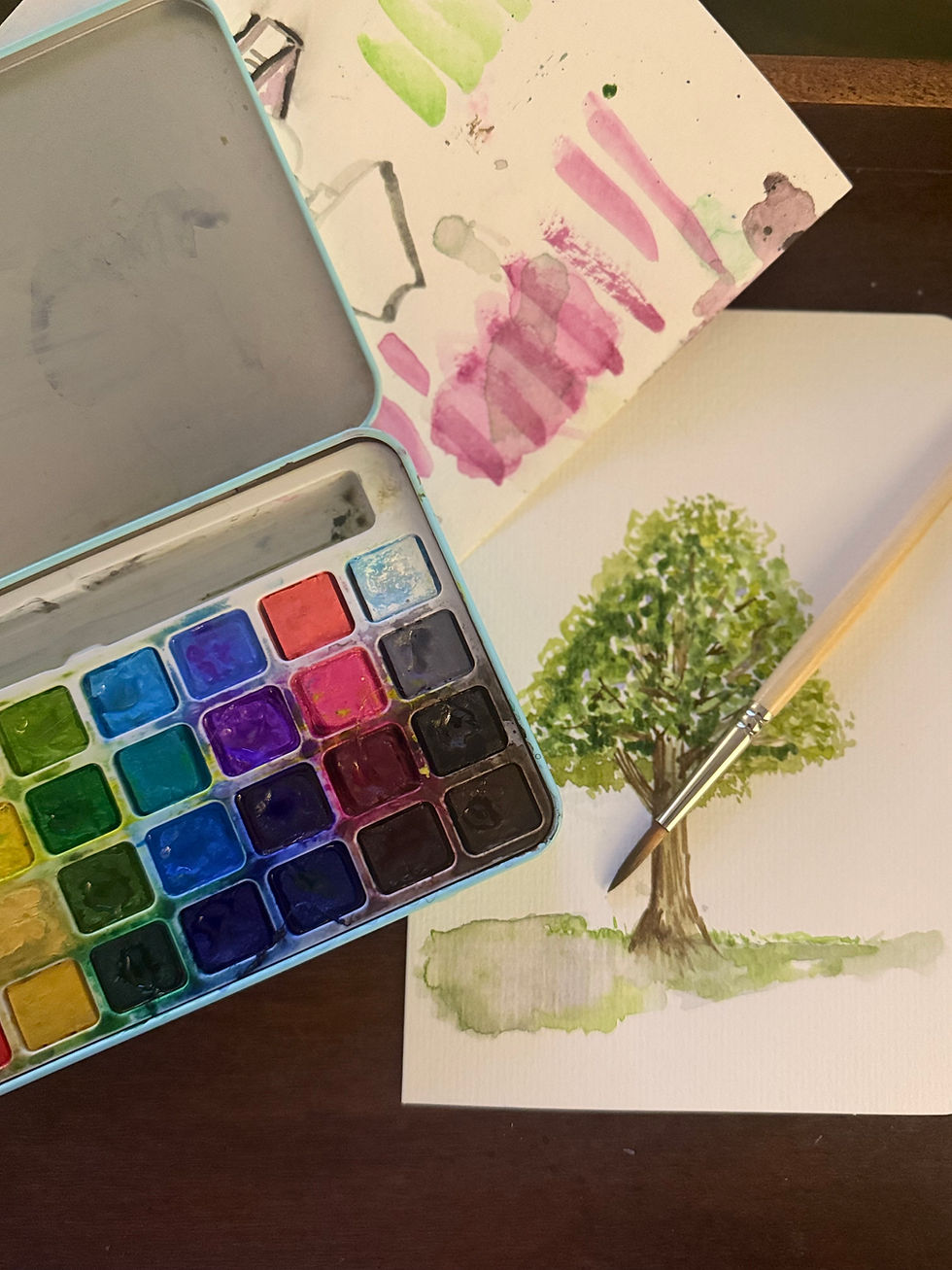
But art is rarely about what is seen.
Art is a multi-party conversation.
There is the discussion between the artist and the blank canvas. The debate between the artist and the body's resistance to sitting still. The banter between the artist and the tools that never seem to do exactly what is intended.
But the deepest conversation belongs to the image itself.
It is the image that summons memories. It pulls from sights, sounds, smells, emotions, and experiences long tucked away. As the brain scrambles between memory and imagination, a soundtrack begins to play. The wind rustles through the leaves. The body remembers the scrapes and scratches earned from years of climbing. Faces appear. Voices return. Moments replay like scenes from an old film.
Suddenly, the artist is no longer painting a tree.
She is painting summer afternoons and childhood adventures. She is painting shelter during storms, conversations with birds, scraped knees, lessons learned, people loved, and time that slipped away too quickly.
What emerges cannot be fully explained because it was never meant to be explained.
It was meant to be experienced.
This is why art affects each person differently.
Only those who have sought refuge beneath a tree during a storm, watched the seasons change through its branches, or prayed that it would survive the fiercest winds can fully participate in this particular conversation.
To everyone else, it remains a tree.
With each stroke, the artist becomes therapist, storyteller, preservationist, and guardian of memory. No matter the medium and no matter the tools, art begins with a moment in time, a memory, and a place.
Within every finished work lie voices remembered, challenges overcome, pain processed, joy rediscovered, and time preserved.
The artist is learning to paint, illustrating the bridge between the past and present.
More importantly, the artist is learning to pay attention.
Beneath the surface, intertwined and often unspoken, lives something even more powerful.
The Art of Place is the ability to recapture fragmented memories, revisit treasured moments, and travel through time whenever our hearts need reminding.
Because art is never really about a tree.
It is about your tree.
The one that held your secrets, witnessed your struggles, sheltered your dreams, and stood quietly in the background while life unfolded around it.
That is the conversation.
That is the memory.
That is the place.
And that is the art, The Art of Place.
We encourage you to begin, to remember and to create.


Comments